

 Image 1 of 1
How Medigap Works
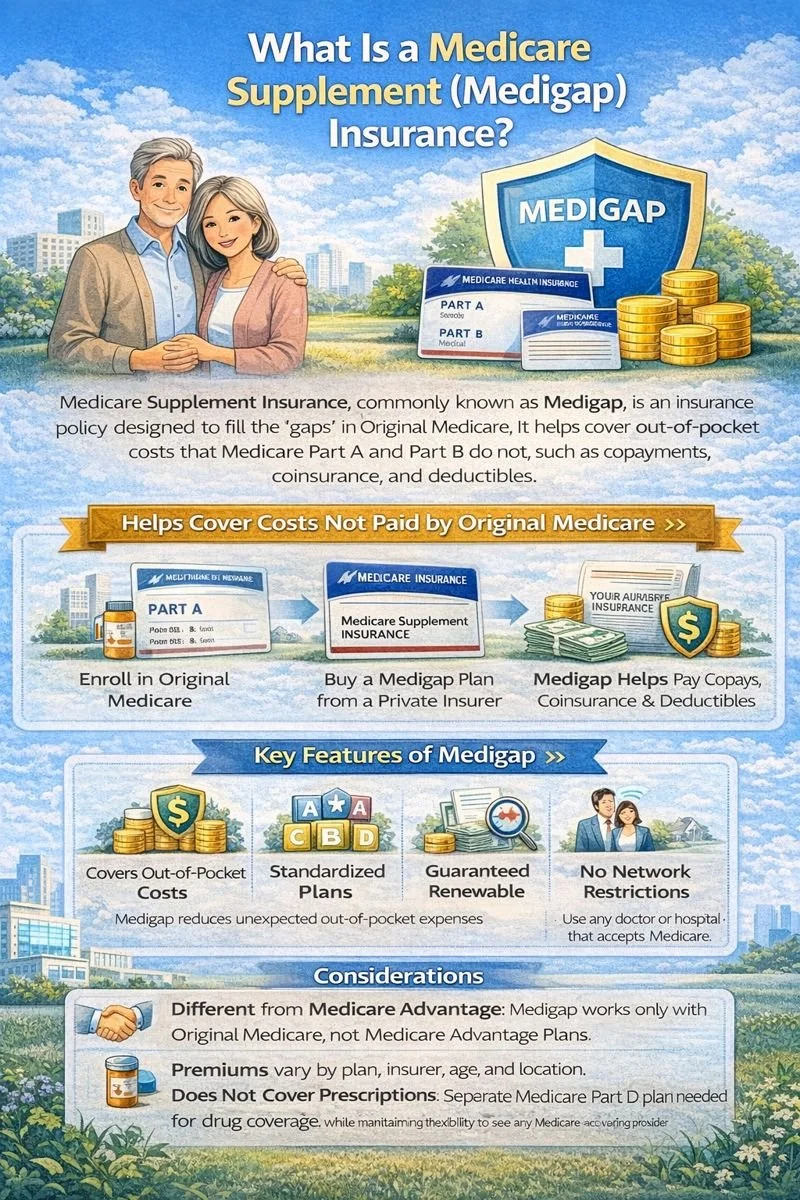
You must be enrolled in Medicare Part A and Part B to buy a Medigap policy.
Medigap policies cover certain costs that Original Medicare does not, depending on the plan.
The policy pays the covered portion of your medical bills directly to you or the provider.
You pay a monthly premium to the insurance company for your Medigap plan in addition to your Part B premium.
Key Features of Medigap
Covers Out-of-Pocket Costs
Medigap helps cover copayments, coinsurance, and deductibles not covered by Medicare.
Standardized Plans
Plans are standardized (Plans A–N) in most states, making it easier to compare coverage across insurers.
Guaranteed Renewable
As long as premiums are paid, your Medigap policy cannot be canceled due to health problems.
No Network Restrictions
You can see any doctor or hospital that accepts Medicare.
Benefits of Medigap
Reduces unexpected healthcare costs
Provides more predictable medical expenses
Offers nationwide coverage with Original Medicare
Helps cover foreign travel emergency care (in some plans)
Gives peace of mind knowing more expenses are covered
Considerations
Separate from Medicare Advantage
Medigap works only with Original Medicare, not Medicare Advantage Plans.
Premium Costs
Premiums vary by plan, insurer, age, and location.
Does Not Include Prescription Drugs
Most Medigap plans do not cover prescription drugs, so a separate Medicare Part D plan may be needed.
Summary
Medicare Supplement (Medigap) insurance is designed to help fill gaps in Original Medicare coverage, reducing out-of-pocket costs and providing greater financial protection. It’s an excellent option for those looking for predictable healthcare expenses and broader coverage while maintaining the flexibility to see any Medicare-accepting provider.